A recent investigation conducted in Poland has brought to light a concerning reality: the majority of physical education initiatives within schools are not adequately equipping students with foundational motor competencies. This deficiency is apparent across both traditional and sport-centric programs, prompting significant questions about the efficacy of current educational approaches in fostering long-term physical well-being and identifying athletic talent.
Insufficient Motor Skill Development in Polish Schools Unveiled by New Study
In a compelling study recently featured in the esteemed journal, Frontiers in Sports and Active Living, researchers shed light on a critical issue plaguing educational institutions in Poland. The findings indicate that school physical education programs, regardless of whether they are traditional or sport-focused, are demonstrably inadequate in fostering fundamental motor skills among their student populations. This deficiency poses substantial implications for children's future engagement in physical activity and their potential for athletic growth.
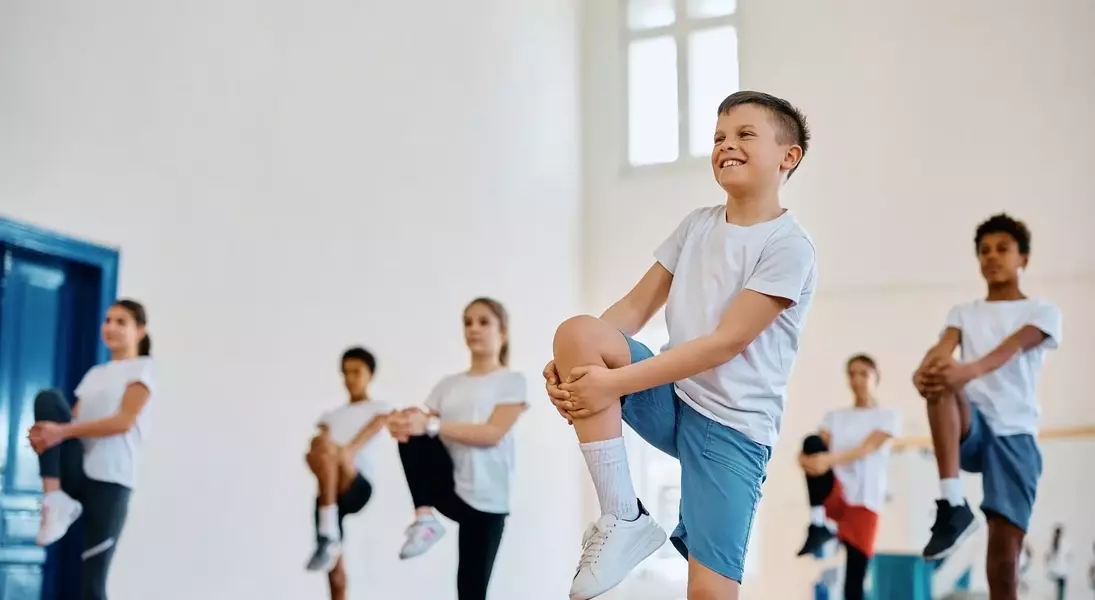
Fundamental motor skills are the cornerstones of physical literacy, encompassing essential movements such as running, jumping, throwing, and balancing. These abilities are crucial not only for participation in sports but also for overall physical and mental health throughout an individual's life. The Polish study involved a substantial cohort of 1,332 students from 12 distinct schools, categorizing them into two groups: those participating in sport-based physical education programs (547 students) and those in traditional programs (785 students). Proficiency was assessed using the Fundamental Motor Skill in Sport (FUS) test, which evaluated six key motor tasks including hurdles, jumping rope, forward rolls, ball bouncing, ball throwing and catching, and kicking and stopping a ball.
The study's revelations were stark. While sport-based programs showed a marginal improvement compared to their traditional counterparts, a pervasive lack of proficiency was observed across the board. An astonishingly small percentage of students—approximately 14% of boys and a mere 6% of girls in the sport-specialized programs—demonstrated good or excellent motor skill proficiency. This indicates that even with increased training hours, the current methodologies are largely falling short of their developmental objectives.
Furthermore, the research highlighted a tendency towards early specialization within sport-based programs, where students primarily honed skills related to a single sport. For instance, basketball players excelled in ball bouncing, soccer players in kicking, and track and field participants in hurdles. However, this specialized focus often came at the cost of overall motor skill development, as these athletes underperformed in tasks outside their specific sport. This pattern suggests that while isolated skill sets may be cultivated, a holistic foundation of motor skills, essential for diverse physical activities and long-term athletic success, remains underdeveloped.
The study's limitations, such as its focus on a specific national sports education program in Poland and the absence of data on participants' physical characteristics like BMI, suggest that further comprehensive longitudinal research is warranted. Future investigations should delve deeper into the long-term impacts of various training approaches, particularly those emphasizing early specialization versus early diversification, on the trajectory of fundamental motor skill development and lifelong physical activity habits.
The findings from this Polish investigation serve as a critical wake-up call for educators, policymakers, and parents alike. The alarmingly low levels of fundamental motor skill proficiency among school children underscore an urgent need to re-evaluate and reform physical education curricula. It's imperative that we shift towards more holistic and diversified approaches that prioritize the broad development of motor competencies over narrow, sport-specific training. By doing so, we can ensure that future generations are better equipped for lifelong physical activity, improved overall health, and a more robust pathway for genuine talent development across a spectrum of sports. This study should inspire a global conversation on how we can better prepare our children for a physically active and healthy future, ensuring that physical education truly fulfills its promise of building a strong foundation for well-rounded individuals.